

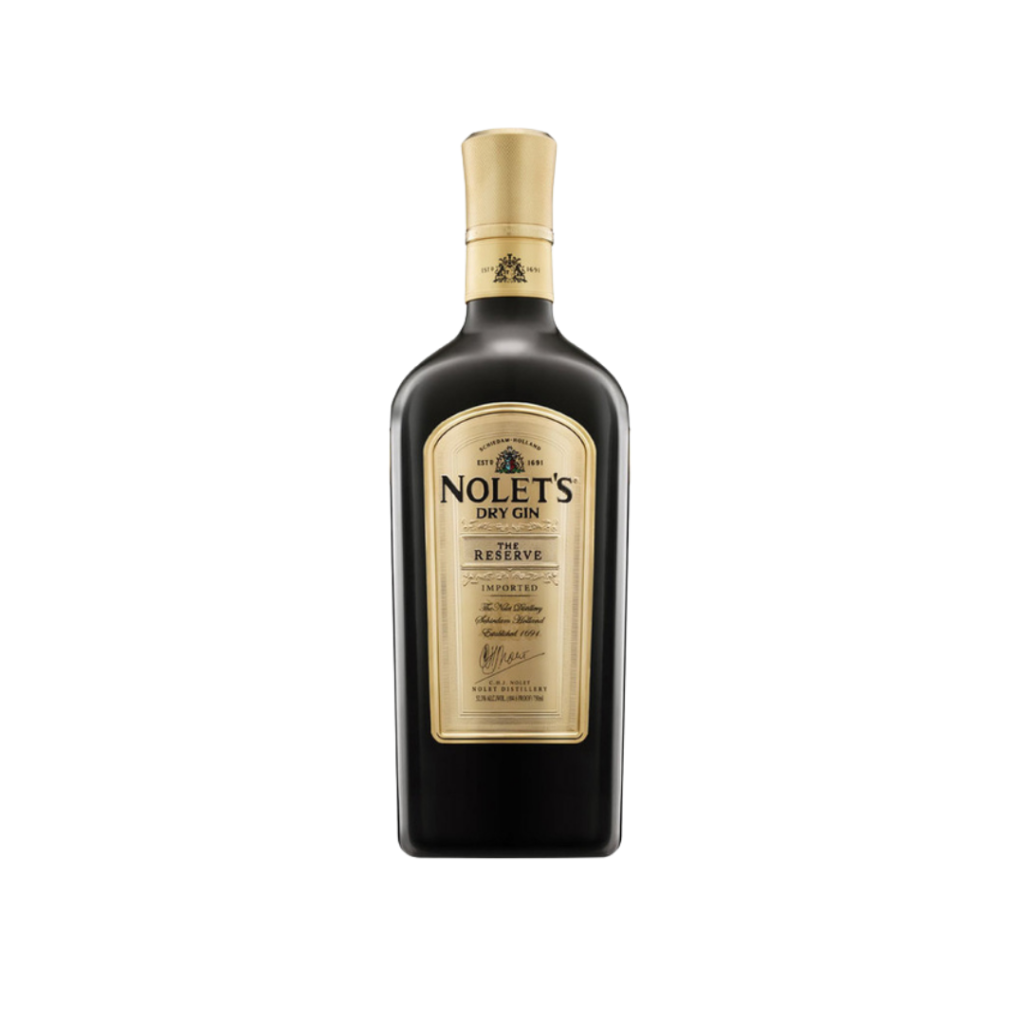

Not every gin announces itself loudly. Some are designed to reward patience, to reveal themselves gradually to those willing to pay attention. Nolets Gin Dry Reserve belongs firmly in that second category. It is a spirit that asks something of the drinker — a certain attentiveness — and, in return, offers a flavour experience that is genuinely uncommon in the category.
Background: A Dutch Legacy Behind the Bottle
The Nolet family has been distilling spirits in Schiedam, the Netherlands, since 1691. That is not a figure deployed for effect — it represents over three centuries of continuous production at the Nolet Distillery, making it one of the oldest family-owned distilleries in the world. The family is perhaps better recognised internationally for Ketel One Vodka, which they produce under license with Diageo. But their gin output reflects a different ambition: a desire to express the full range of their craft within a botanical spirit.
The Dry Reserve is the premium expression in the Nolet’s range, sitting above the Silver expression and produced in considerably smaller quantities. It is bottled at 52.3% ABV — a strength that signals intent without veering into the territory of a navy-strength bottling. The Nolet family positions it as a collector’s gin, and the pricing reflects that positioning accordingly.
Botanicals and Flavour Profile
The botanical composition of Nolets Gin Dry Reserve is where things become genuinely interesting. The recipe centres on three key botanicals that set it apart from more conventional dry gin expressions: saffron, verbena, and peach. These are not common choices, and their combination suggests a distillery comfortable operating at some distance from tradition.
Saffron brings a warm, slightly earthy richness that is understated rather than dominant — it colours the spirit faintly gold and contributes depth without overwhelming the palate. Verbena offers a herbal, lightly citrus-forward brightness that lifts the overall profile. Peach, perhaps the most immediately expressive of the three, lends a soft, rounded fruitiness that the spirit carries with surprising elegance.
Juniper is present, as it must be, though those expecting a robust, resinous juniper backbone may find the Dry Reserve more restrained in that regard than many London Dry expressions. The overall impression on the nose tends toward the floral and aromatic — warm, complex, and faintly exotic. On the palate, the higher ABV provides structure and a pleasing warmth, while the fruit-forward botanical selection ensures the experience remains approachable rather than austere. The finish is thought to linger with a gentle spice and residual sweetness that many drinkers find particularly appealing.
For those who appreciate gins that lean into floral and fruit-driven profiles, this is a worthwhile point of comparison. Fans of Citadelle Gin Jardin d’été, with its own nuanced seasonal botanical approach, may find the Dry Reserve occupies a similarly refined space, albeit with a markedly different character.
How to Drink It
Given its complexity and price point, the Dry Reserve rewards being appreciated neat or with minimal dilution first. Poured over a single large ice cube in a crystal rocks glass, it allows the botanicals to present themselves without interference. This is a reasonable starting point for anyone encountering the gin for the first time.
For those who prefer a longer serve, a high-quality tonic with a light botanical profile — one that will not compete with the saffron and peach — is the more considered choice. A neutral, dry tonic water at roughly one part gin to two parts tonic preserves the spirit’s character. The garnish warrants some thought here: a thin slice of fresh peach or a small sprig of fresh verbena, where available, echoes the botanical profile naturally. A strip of lemon peel can also work well, lending a bright aromatic note without overwhelming the more delicate elements.
We would suggest some restraint when it comes to cocktail applications. The Dry Reserve can certainly feature in a martini — served very cold, with the lightest possible vermouth presence, or stirred with only a whisper of dry vermouth — and the result is a striking, aromatic drink. However, using it as a base in more assertive, citrus-heavy cocktails risks obscuring the very qualities that distinguish it. If a gin-forward cocktail is the goal, something like a simple Negroni variation or a gin and tonic remains the more thoughtful application.
Who Will Appreciate This Gin
Nolets Gin Dry Reserve is not a gin for every occasion, nor is it intended to be. It is best suited to a drinker who has developed some familiarity with the gin category and is curious to explore expressions that challenge conventional expectations. Those who have moved beyond the standard London Dry profile and find themselves drawn to aromatic, floral, or fruit-forward gins are the most natural audience here.
The price point places it clearly in the premium tier, and it is worth approaching as an occasional bottle rather than an everyday pour. For those who collect and compare across producers, it occupies an interesting position — a Dutch distillery with centuries of heritage producing a gin that reads, in many respects, as confidently contemporary. It shares something of the pioneering spirit one finds in other producers willing to depart from botanical convention, not unlike the approach taken by distilleries such as St. George Terroir Gin, which similarly pursues a singular, place- and ingredient-driven identity rather than a broadly familiar flavour profile.
Those who prefer a strongly juniper-led, classical dry gin may find the Dry Reserve too far removed from their preferences — and that is a fair assessment, not a criticism. The gin is clearly designed with a specific vision, and it executes that vision with considerable care.
A Closing Thought
Nolets Gin Dry Reserve is a considered, accomplished expression from a distillery that understands both tradition and restraint. Its botanical selection is uncommon enough to hold the attention of experienced gin drinkers, while its overall balance ensures it never feels merely eccentric. For those willing to engage with it on its own terms, it is a bottle that repays careful attention.


