

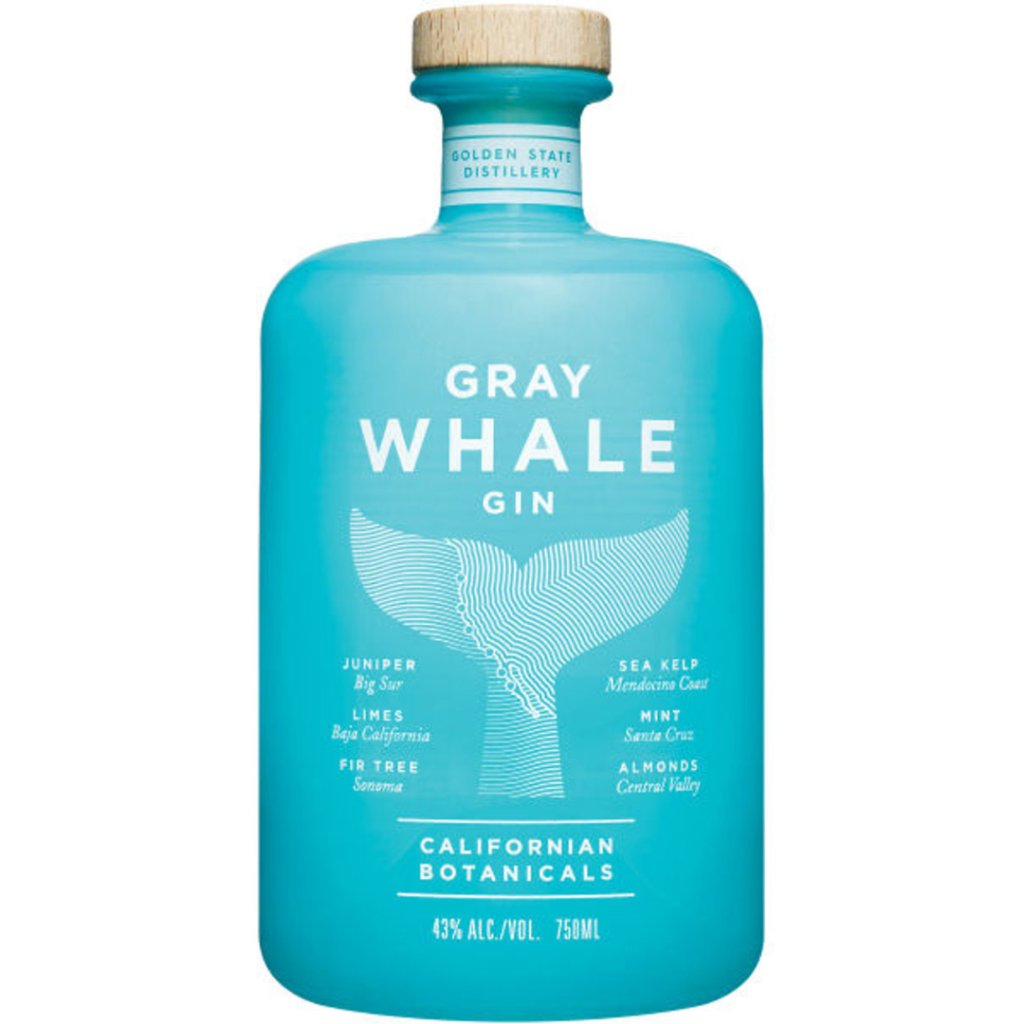

Not every gin arrives with a clear sense of place, but Gray Whale Gin California Small-Batch Gin makes its origins unmistakable. Produced in small batches and drawing its botanical identity almost entirely from the California coastline and its surrounding landscape, this is a gin that rewards those who appreciate provenance in a glass. It does not shout. It does not try to impress through novelty alone. Instead, it offers something quieter and, in our view, more lasting: a coherent vision of a particular place, rendered in spirit form.
Background: Where It Comes From
Gray Whale Gin is produced by Humboldt Distillery, based in Humboldt County in Northern California — a region better associated with redwood forests and the Pacific coast than with gin production. The name is a considered choice: the gray whale migrates along the California coastline each year, traveling from Alaska to Baja California and back, tracing a route that passes through many of the same landscapes that supply this gin’s botanicals. That migratory arc is not merely poetic framing; it serves as the actual sourcing map for what goes into the bottle.
The distillery operates with a stated commitment to sustainability — a value that appears embedded in sourcing decisions rather than reserved for marketing materials. The grain base is certified organic, and botanical ingredients are sourced from locations along or near the whale’s migration path. For those who follow the growing conversation around responsible production in craft spirits, this is a brand worth understanding more closely.
Botanicals and Flavour Profile
The botanical bill is where Gray Whale Gin earns its most interesting credentials. Alongside juniper — which retains its expected role as the defining spirit of any gin — the recipe incorporates ingredients including California coastal sage, Sonoma County mint, Pacific Kombu seaweed, limes from Baja California, almonds from the Central Valley, and fir tree tips sourced from the forests of Mendocino. It is an uncommon combination, and one that suggests a flavour profile considerably removed from the London Dry tradition.
On the nose, one might reasonably expect something herbal and coastal — the sage and fir tips likely contributing an aromatic, almost resinous quality, while the seaweed introduces a faint saline note that is suggestive rather than pervasive. The citrus from Baja limes appears to bring a brightness that keeps the profile from feeling too weighted or earthy. The almond, used with apparent restraint, may provide a gentle, rounded quality on the palate without pushing the spirit toward sweetness.
This is not a gin that mimics the structured, juniper-forward character of something like a classic London Dry. Drinkers accustomed to more conventional botanical approaches — coriander seed, angelica root, orris — may find this a considered departure. Those who appreciate the way terroir-led gins from other parts of the world, such as ST. GEORGE TERROIR GIN, channel their landscapes into their flavour will likely find much to appreciate here. Both are American gins that take the notion of place seriously, and both reward attentive drinking.
How to Drink It
Given the botanical complexity of Gray Whale Gin, we suggest approaching it first with a straightforward serve that allows the character of the spirit to come through without interference. A simple pour over ice, or with a measured splash of cold water, provides a useful starting point.
For those who prefer a longer drink, a well-made gin and tonic using a dry, lightly aromatic tonic water would complement rather than crowd the botanical profile. We suggest avoiding tonics that are heavily sweetened or flavoured, as these risk obscuring the more understated elements of the gin — particularly the coastal sage and fir notes that give it its regional character. A thin wheel of lime and a small sprig of fresh herbs would serve as appropriate garnishes.
Gray Whale Gin also lends itself to creative cocktail applications. The saline, herbal qualities make it an interesting choice for a Martini served on the drier end of the spectrum, where the gin’s character can carry the drink. A small amount of dry vermouth and perhaps a strip of expressed lime peel in place of the conventional lemon or olive would be a considered approach. The botanical profile also suggests potential in longer, more aromatic builds — a gin-based coastal riff on a Tom Collins, for instance, with fresh lime juice, a touch of honey syrup, and soda water, could be a natural fit.
As with any gin that carries particular botanical distinction, we encourage some patience before settling on a preferred serve. The profile reveals itself differently depending on temperature, dilution, and accompaniment.
Who Will Appreciate It
Gray Whale Gin will appeal most to drinkers who are genuinely curious about where their spirits come from. If you find yourself drawn to gins that carry a strong sense of regional identity — the kind of expression that could only have come from one particular place — this is worth exploring carefully.
It would also interest those with an existing appreciation for coastal and herb-forward botanical profiles. Drinkers who have spent time with gins that draw on native botanicals, such as the distinctly foraged character found in Ransom Dry Gin, will find Gray Whale occupying a similarly thoughtful, non-conventional space. The commitment to sustainability may also resonate with those for whom production ethics form part of a purchasing decision.
It is less likely to satisfy drinkers who prefer a clean, juniper-dominant gin where the structure is bold and immediately familiar. That is not a criticism of either preference — it is simply a question of what one is looking for in a given bottle.
Verdict
Gray Whale Gin California Small-Batch Gin is a considered, coherent expression of a specific part of the world, and one that demonstrates what small-batch American gin production is capable of when botanical sourcing is taken seriously. It occupies a distinct position within the broader landscape of craft gins, neither chasing trend nor defaulting to convention. For those with an appetite for gins that reward careful attention, it is a worthwhile addition to any exploration of American craft spirits.


