
Gin is one of the more nuanced spirits on the shelf, yet its foundations are straightforward once you understand what goes into it. At its core, gin is a neutral spirit flavored predominantly with juniper berries and, almost always, a thoughtfully assembled selection of additional botanicals. What makes gin endlessly interesting — and at times, genuinely surprising — is how much variation is possible within that simple framework. The base spirit, the botanicals chosen, the distillation method, and the water used to bring gin down to bottling strength all contribute to the final character in the glass. Understanding these elements does not just satisfy curiosity; it changes the way you appreciate the spirit entirely.
The Base Spirit: Where Gin Begins
Before any botanical is introduced, gin begins as a neutral grain spirit. Most commonly, this base is distilled from wheat, barley, corn, or rye — each of which contributes a subtly different texture and mouthfeel to the finished gin, even after redistillation. Wheat tends to produce a lighter, cleaner base; corn offers a gentle sweetness; rye can introduce a faint spice. Some distillers work with more uncommon base materials — grape spirit, molasses, or even whey — which can lend the gin an uncommon softness or depth.
The base spirit is distilled to a high strength, typically above 96% ABV, to produce something largely neutral in character. This neutrality is intentional: it allows the botanicals to express themselves without interference. The spirit is then redistilled with those botanicals to create what we recognize as gin. This redistillation process is where the craft and individuality of a producer become most apparent.
Some distillers, particularly those working in the Old Tom or aged styles, choose base spirits with a little more personality. Four Pillars Old Tom Gin, for instance, works with a base that supports a richer, slightly sweeter botanical profile, while Bluecoat Barrel Finished Gin introduces the additional character of oak aging after distillation — a decision that adds warmth and complexity to both the base and the botanical layer.
Juniper: The Defining Botanical
Legally and historically, juniper is what makes gin gin. In most jurisdictions, a spirit cannot be classified as gin unless juniper is the predominant botanical flavor. The berries — which are technically small seed cones from the Juniperus communis plant — contribute that characteristic piney, resinous quality that defines the category. The intensity of juniper varies considerably from one expression to another, and this single variable shapes the overall personality of a gin more than any other ingredient.
Classic London Dry expressions tend to place juniper at the forefront. Never Never Distilling Co. Juniper Freak Gin is a deliberate study in juniper-forward distillation, with the botanical rendered in acute, almost architectural detail. Meanwhile, contemporary gins often position juniper as part of a broader botanical conversation rather than its dominant voice — present, recognizable, but balanced against citrus, floral, or herbal notes.
The quality and provenance of juniper matters, too. Berries sourced from different regions carry different aromatic profiles — some more resinous and piney, others more floral or subtly sweet. Distillers who are selective about their juniper source are often communicating something important about their commitment to ingredient quality.
The Botanical Palette: What Else Goes Into Gin
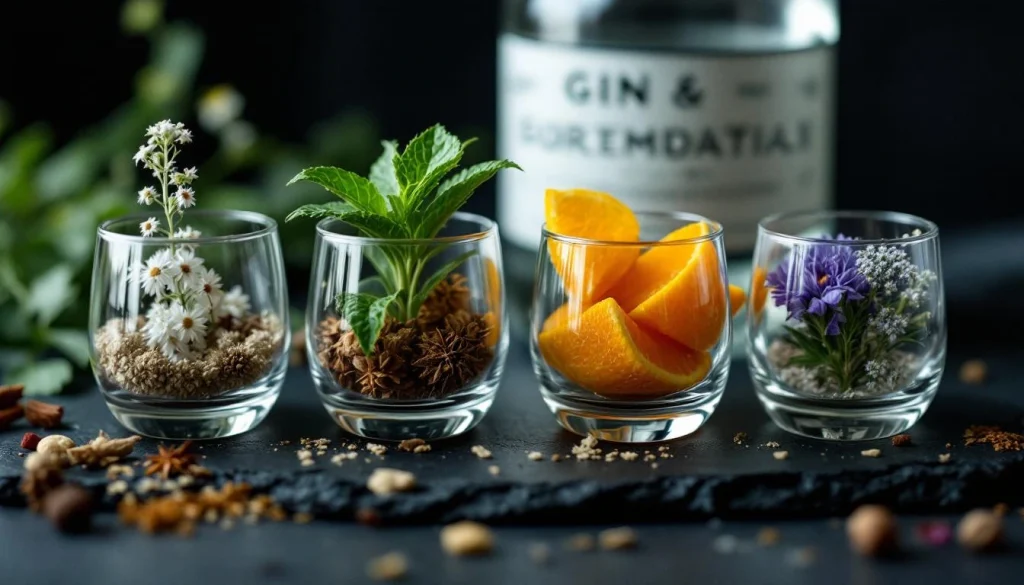
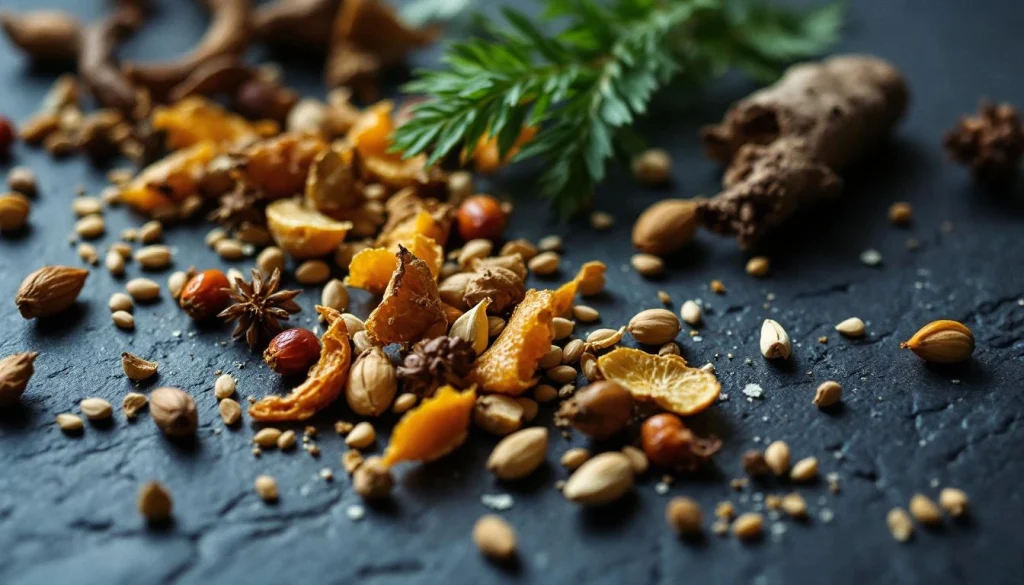
Beyond juniper, gin makers work with a remarkable range of botanicals — roots, seeds, peels, flowers, barks, and berries — to build the aromatic and flavor profile of their spirit. The most traditional supporting botanicals include coriander seed, angelica root, citrus peel, orris root, cassia bark, and cardamom. Each serves a purpose: coriander adds a citrusy brightness; angelica root and orris root act as fixatives, binding other aromas together; cassia contributes warmth; cardamom introduces a clean, aromatic spice.
Contemporary distillers have expanded this palette considerably. Producers now work with botanicals drawn from their immediate geography — regional wildflowers, local herbs, endemic fruits — giving rise to gins that are as much an expression of place as they are of craft. Herbarium New Forest Gin, Spring Forest draws on botanicals foraged from its surrounding English woodland, while Hapusa Himalayan Dry Gin incorporates Himalayan juniper alongside mangoes, gondhoraj lime, and other ingredients native to the Indian subcontinent. Shiso Gin uses the Japanese herb shiso as a central botanical, producing a spirit with an uncommon herbaceous quality that reflects its origin with quiet precision.
Fruit-forward expressions represent another layer of possibility. Gin Fabbri, Dry Gin With Pure Amarena Fabbri Distillate incorporates the distillate of Amarena cherries — a singular approach that connects gin production to Italian confectionery heritage. Glendalough Wild Rose Irish Gin uses wild rose as a leading floral note, producing something delicate and distinctly Irish in character. These expressions illustrate how the botanical selection is, in many ways, the clearest statement a distiller can make about their intentions and identity.
Distillation Methods: How Botanicals Become Gin
Once the botanicals are selected, the distiller must decide how to incorporate them into the spirit. There are three principal approaches, and each produces a meaningfully different result.
The most traditional method is pot still distillation with maceration. The botanicals are steeped in the base spirit — sometimes for several hours, sometimes for days — before the entire mixture is redistilled. This extended contact draws out a fuller, rounder expression of each botanical. The result tends toward richness and integration.
A second approach places the botanicals in a basket suspended above the spirit in the still, so that vapor passes through them rather than the liquid itself. This vapor infusion method tends to produce lighter, more delicate botanical expressions — particularly well suited to floral or fragile ingredients that might become harsh under prolonged maceration. ST. George Terroir Gin uses a combination of approaches to capture the aromatic complexity of the Northern California landscape it references.
A third method — cold compounding — involves adding natural botanical extracts or distillates directly to a neutral spirit without further distillation. This approach is less common in premium gin production but can be used effectively when a distiller wants precise control over individual botanical contributions.
After distillation, the gin is reduced to its bottling strength using water — often specially sourced or treated. This final step, understated as it sounds, influences the texture and mouthfeel of the gin in ways that attentive drinkers will notice.
A Starting Point, Not an End Point
Understanding what gin is made of — the neutral base, the legally required juniper, the carefully chosen supporting botanicals, and the distillation decisions that bring them together — provides a genuinely useful lens for exploring the category. Once these fundamentals are clear, the differences between a classic London Dry such as Artingstall’s Brilliant London Dry Gin and a terroir-driven expression like Gray Whale Gin California Small-Batch Gin become legible rather than mysterious.
We suggest beginning with a gin whose botanical list is openly communicated on the label or the producer’s website. Reading that list before sampling the gin, and then seeing how those ingredients express themselves in the glass, is one of the more rewarding exercises available to a curious drinker. The gin directory at Gin Observer is a reasonable place to begin that exploration.