
Not every gin announces itself with a familiar name or a well-worn origin story. DOA is the kind of bottle that invites curiosity — a name that is deliberately spare, a label that does not over-explain itself. For gin drinkers who appreciate a spirit on its own terms, that restraint can itself be a signal worth following. We wanted to learn more, and what we found was a gin that rewards a measured, attentive approach.
Background: Where DOA Comes From
DOA occupies a space in the gin landscape that is becoming increasingly well-populated but no less interesting for it — the independent, craft-oriented producer working at smaller scale with a deliberate sense of identity. While the brand does not carry the institutional weight of long-established distilleries, that relative youth is part of its appeal. Smaller producers tend to work with a clarity of intention that larger operations can sometimes lose in the process of scaling. DOA appears to embrace that sensibility: a gin made with specific choices in mind, rather than one shaped by committee or category convention.
The details of its production are modest in their presentation, which, in our experience, often indicates a team that prefers the liquid to carry the argument. We appreciate that approach.
Botanicals and Flavour Profile
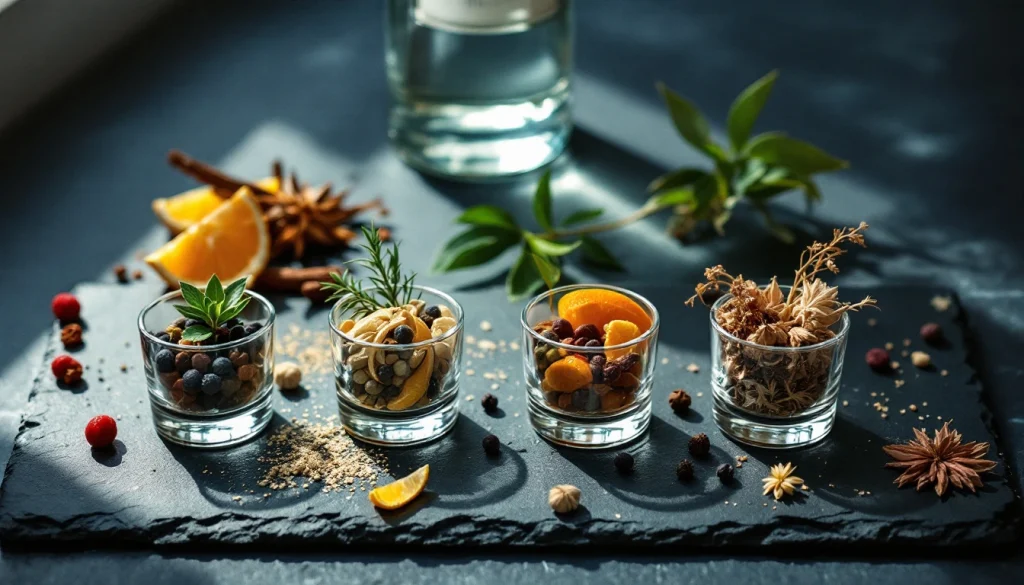
As with any gin, juniper forms the structural foundation here, and DOA does not appear to be a brand that treats juniper as an afterthought. Beyond that cornerstone, the botanical selection — while not exhaustively catalogued in the brand’s own materials — suggests an interest in balance rather than novelty for its own sake. The impression is of a gin that does not lean aggressively in any single direction: neither overwhelmingly citrus-forward nor heavily spiced, neither austere nor overtly floral.
On the nose, one might reasonably expect a measured interplay of resinous pine and softer herbal notes, with any citrus elements present in a supporting rather than dominant role. The palate, where gin truly makes its case, appears to carry that same sense of proportion — a spirit that offers enough complexity to hold attention without demanding that the drinker parse every layer with analytical intensity. Finish length seems moderate and clean, which suits a gin intended to perform well in both mixed and near-neat contexts.
For those who appreciate gins that walk a considered middle path — not as minimal as, say, a stripped-back London Dry, but not as botanically adventurous as some of the more expressive contemporary styles — DOA occupies an interesting position. It is worth comparing, broadly, with other craft gins that prioritise structural coherence over dramatic botanical statements. Among Italian producers taking a similarly disciplined approach, Ginificio Microdistillery’s Ginuno offers a useful point of reference. For those drawn to gins where individual botanical character is carefully weighted, Gin Tzòa Distilled Gin presents a comparable philosophy of considered construction.
How to Drink DOA
A gin of this profile — balanced, juniper-led, with understated supporting botanicals — tends to reveal itself most clearly with relatively neutral accompaniment. A well-made gin and tonic using a quality tonic water that is not too sweet or aggressively flavoured would be a natural starting point. We suggest a light, dry tonic in a balloon glass over a generous measure of ice, with a simple garnish: a thin strip of lemon peel, expressed and draped over the rim, or a few juniper berries if you wish to echo the botanical core.
For those who prefer their gin in a more spirit-forward format, a Martinez — equal parts gin and sweet vermouth, with a bar spoon of maraschino liqueur and a dash of Angostura bitters, stirred and served in a chilled coupe — would allow DOA’s structure to carry through. The gin’s apparent balance makes it a reasonable candidate for a classic Negroni as well, where it would need to hold its own against vermouth and Campari without being overwhelmed.
If you are sampling DOA neat or with a small measure of chilled water, a tulip-shaped nosing glass will concentrate the aromatics and give you the clearest sense of what the distillers intended. This is always a worthwhile exercise before committing to a longer serve.
Who Will Appreciate DOA
DOA is likely to appeal most to gin drinkers who have moved past the early phase of seeking out bold, statement-making bottles and are now drawn to craft gins that demonstrate restraint and balance. If you find yourself more interested in how a gin is constructed than in how loudly it announces a single dominant note, this is a brand worth your attention.
It would also suit someone building a home bar with intention — a gin that can perform reliably across a range of cocktails without asserting itself in ways that limit versatility. In that sense, it shares something with other thoughtfully made craft gins that prioritise usefulness alongside character, such as Gin Laura, which similarly rewards gin drinkers who value coherence over spectacle.
Newcomers to craft gin who are curious about what distinguishes smaller producers from major commercial labels will also find DOA an accessible and informative experience — not because it is simple, but because it makes its qualities available without requiring specialist knowledge to appreciate them.
A Brief Verdict
DOA presents itself as a gin with a clear sense of what it wants to be: balanced, considered, and unpretentious without being anonymous. It does not seek attention through novelty, which in the current gin landscape is itself a particular kind of statement. For those willing to give it the time and attention it quietly asks for, it is likely to be a genuinely satisfying addition to the shelf.