
Some gins earn attention through provenance. Others earn it through an unusually precise idea of what they want to be. Gin Fabbri, Dry Gin With Pure Amarena Fabbri Distillate belongs to the second category. It arrives carrying the weight of a name that Italian confectionery and culinary circles have understood for well over a century — and it applies that heritage to gin with a clarity of purpose that is genuinely worth exploring.
The Story Behind the Bottle
The Fabbri name has been associated with Amarena cherries — those dark, bittersweet wild cherries preserved in rich syrup — since 1905, when the company was founded in Bologna, Italy. Across decades and generations, Fabbri built a reputation as a producer of exceptional fruit preparations, confectionery ingredients, and flavouring products used by pastry chefs and bartenders around the world. The Amarena Fabbri cherry, in its recognisable white and blue ceramic jar, became a standard of the Italian culinary tradition.
The move into gin, then, was not a departure so much as an extension. Rather than simply infusing a base spirit with cherry flavouring, Fabbri chose a more considered approach: incorporating a pure distillate of Amarena cherries into an otherwise dry botanical gin. This distinction matters. The result is a spirit that speaks to the Fabbri identity without abandoning the structural requirements of what a gin should be.
Botanicals and Flavour Profile
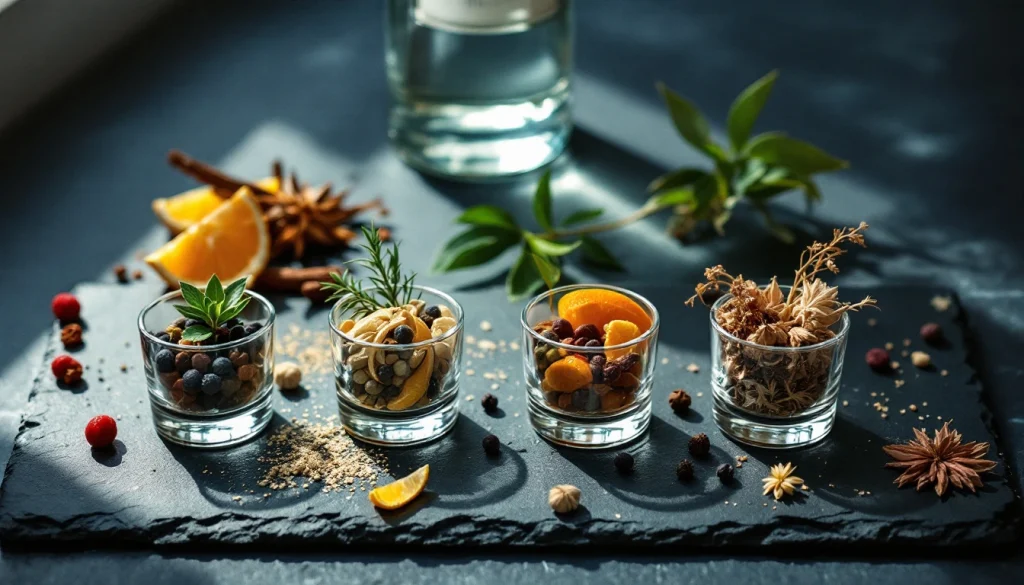
At its core, Gin Fabbri is structured as a dry gin — juniper leads, as it should, providing the resinous, evergreen foundation that anchors the spirit. Supporting botanicals follow the classic conventions of the style, with coriander seed, angelica root, and citrus elements likely contributing to the aromatic framework, though the precise botanical bill is not disclosed in full detail.
What distinguishes this gin is the inclusion of a pure Amarena cherry distillate, which is folded into the blend rather than added as a post-distillation infusion. This approach tends to produce a more integrated result — the cherry character, where it appears, is likely to read as nuanced and woven into the spirit rather than applied on top of it. One might expect suggestions of dark fruit and a gentle almond-like quality on the nose, with the dry gin structure keeping any sweetness well in check on the palate. The finish, based on what this production method typically yields, is likely to carry a pleasantly understated bitter-fruit note — a characteristic of Amarena cherries that differentiates them sharply from sweeter cultivated varieties.
Drinkers who appreciate the interplay between botanical dryness and fruit-derived complexity — rather than outright sweetness — will find this profile particularly engaging. It occupies a considered space between the austerity of a classic London Dry and the more expressive, fruit-forward styles that have proliferated in recent years. For those curious about other Italian expressions that pursue a similarly deliberate approach to flavour, Ginificio Microdistillery’s Ginuno and Gin Tzòa Distilled Gin offer useful points of comparison within the Italian craft category.
How to Drink It
Given the dry gin foundation, Gin Fabbri is versatile enough to carry across several serves without losing its character.
With tonic: A premium Indian tonic water — something relatively neutral and not overly botanical — is likely the most straightforward way to appreciate the interplay between the juniper structure and the Amarena distillate. Serve over a large ice cube in a copa glass, which opens the aromatics. For a garnish, a fresh or preserved dark cherry is the natural and most coherent choice, reinforcing the spirit’s identity without competing with it.
Neat or with water: If you are inclined to explore a gin without dilution or mixer, a small measure at room temperature will offer the clearest reading of the botanical architecture. A single drop of still water can open the spirit and encourage the aromatic layers to present themselves more fully.
In cocktails: Gin Fabbri is well suited to Negroni-adjacent builds, where its dry structure and fruit-inflected depth would sit comfortably alongside sweet vermouth and a bitter liqueur. A Martini variation with a Maraschino or cherry-washed vermouth would also be a natural direction. For a longer serve, a simple combination of Gin Fabbri, lemon juice, and soda — without added sweetener — would allow the Amarena character to provide its own tonal counterpoint to the citrus.
Who Will Appreciate This Gin
Gin Fabbri is not positioned for those seeking an overtly sweet or confectionery-style spirit. The dry gin architecture is genuine, and the Amarena distillate serves as a flavour dimension rather than a flavour replacement. With that in mind, this bottle will appeal most to drinkers who already appreciate the dry gin style and are curious about how fruit character can be introduced with restraint and craft.
It may also speak to those with an interest in Italian culinary tradition — the kind of drinker who understands the Fabbri Amarena cherry not as a novelty but as a serious ingredient with a defined sensory identity. The story and the execution are coherent in a way that rewards that context.
Those who enjoy exploring how fruit-forward production differs from fruit-flavoured gin — a meaningful distinction — will find Gin Fabbri a particularly instructive example. For other expressions that integrate singular ingredients with dry gin discipline, Collesi Gin Barrel, another Italian producer with a thoughtful approach to gin craft, offers an interesting parallel from a different angle.
A Closing Thought
Gin Fabbri, Dry Gin With Pure Amarena Fabbri Distillate is a coherent and considered spirit — one that draws on a genuine and long-standing ingredient tradition rather than simply borrowing a name for its label. For drinkers interested in how Italian craft and culinary heritage can inform gin production, it is a bottle worth sampling with care and attention. The ambition is measured, and the execution appears to honour it.